Abstract
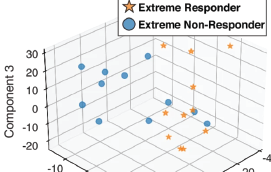
There are currently no clinically validated markers for taxane sensitivity in metastatic castration-resistant prostate cancer (mCRPC), so we aimed to predict docetaxel response from circulating cell-free DNA. We identified 180 patients with pre-treatment plasma specimens collected within 12 months of starting docetaxel for mCRPC at our institution. 138 underwent ultra-low pass whole genome sequencing (ULP-WGS), and tumor fractions (TFx) and copy number alterations (CNAs) were derived using ichorCNA. 79 samples with TFx > 0.04 underwent targeted panel sequencing (TPS). TP53 mutation was significantly associated with docetaxel non-response (p = 0.018); deletions involving bands located in arms 11p, 11q, 10q and 3p were enriched in responders, and amplifications in regions of 1p and 6q were enriched in non-responders. Transcription factor (TF) binding activity was inferred using Griffin, which identified TFs (ZSCAN4, CTCF, PHOX2B) with trends towards increased activity in non-responders (n = 22) and others (including PBX1, MYBL2, OSR2, PDX1 and ZIC2) in responders (n = 24). A combined ensemble binary classifier generated through XGBoost integrating these feature sets to predict docetaxel response outperformed models derived from any single feature set, achieving a training area-under-the-ROC curve of 0.87. Pre-cabazitaxel specimens, representing a docetaxel-resistant population, were used for external validation, with a concordance of 79.6% for predicting non-response.